Snowflake Cup: A Designer’s Real-World Embroidery Review
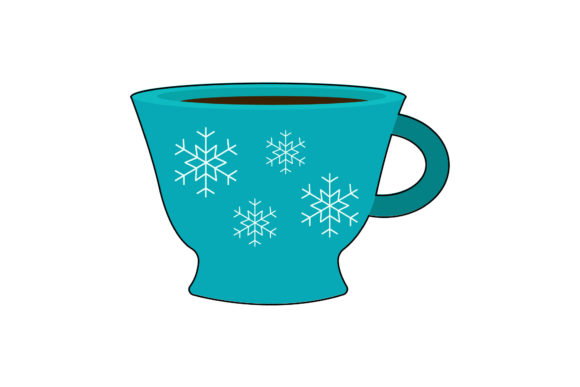
As someone who’s stitched hundreds of custom pieces—from boutique baby onesies to holiday market tote bags—I opened Snowflake Cup expecting a crisp, wintry icon. What I found was more nuanced: a clean, balanced snowflake nested inside a minimalist cup silhouette. It doesn’t scream “holiday”—it whispers “cozy ritual.” That subtlety is its strength—and its first real test.
First Impression: Mood Over Motif
The Snowflake Cup lands softly—not as a literal mug or a festive ornament, but as a quiet emblem of warmth and seasonality. The snowflake isn’t fussy; it’s symmetrical, open, and legible at small scale. The cup outline is smooth, with gentle curves and no sharp interior angles—ideal for satin stitch execution. As an Icons asset, it avoids clutter while retaining personality. For embroidery designers, that means fewer dropped stitches in corners and less risk of thread nesting where lines converge.
Real Project Test: A Holiday Tote Bag for My Local Café Pop-Up
Last December, I used Snowflake Cup on a natural linen tote bag for a local café’s holiday gift set. We paired it with soft heather-gray thread on off-white fabric—no metallics, no dense fills. The result? A tactile, handmade product that felt intentional, not mass-produced. Customers noticed the detail: “Is that a snowflake *in* the cup?” they’d ask. That tiny moment of recognition—that’s what elevates a simple embroidered patch from decoration to conversation starter.
Where It Shines (and Where It Needs Care)
Snowflake Cup works beautifully on:
- Custom apparel: Sweatshirts, crewnecks, and lightweight jackets—especially when placed on left-chest or sleeve positions. Its moderate width-to-height ratio fits standard hoop sizes without distortion.
- Baby embroidery: On organic cotton onesies or burp cloths, the open snowflake reads clearly even at 2.5" tall. No tiny interior points that vanish under fill stitch density.
- Embroidered patches: Clean outer edge + minimal internal detail = easy peel-and-stick backing application and crisp heat-press results.
- Holiday gifts & boutique branding: It’s versatile enough for a tea towel line, a nursery pillow cover, or a small shop’s seasonal apron collection—all without feeling repetitive or dated.
But here’s where attention matters:
- Textured or stretchy fabric: On terry cloth towels or ribbed knit caps, the cup outline may soften slightly. Use medium-weight cutaway stabilizer—not tear-away—to support the curve.
- Dark fabric: The design’s thin outer stroke (visible in the SVG and AI files) can get lost on charcoal or navy. Boost contrast with a white underlay or switch to a slightly bolder stroke weight before digitizing.
- Curved surfaces: Caps and beanies demand careful placement. Avoid the crown seam—center it over the front panel instead. The snowflake’s symmetry helps it read cleanly even when slightly skewed.
- Frequent washing: This isn’t a high-density fill-stitch design, so it holds up well—but always recommend cold wash/low dry to preserve thread sheen and fabric integrity in the finished product.
Design Assets That Support Real Work
The five included files—AI, EPS, SVG, JPG, PNG—are genuinely useful, not just marketing filler. As a designer, I opened the AI file first to check anchor points and path simplicity (clean vectors = smoother digitizing). The SVG held up perfectly in my embroidery software’s vector import tool. The JPG and PNG? Essential for quick mockups—especially when prepping Etsy listings or client proofs. You can drop the PNG into a printable mockup template and instantly show how Snowflake Cup looks on a cream sweatshirt or oatmeal tote—no guesswork.
What It Adds to Your Craft Business
This isn’t just another digital embroidery file. Snowflake Cup quietly raises perceived value. On an Etsy listing, it signals thoughtful curation—not generic clipart. For a small shop owner bundling holiday kitchen goods, it unifies a collection: same motif across tea towels, oven mitts, and aprons, reinforcing brand consistency without repetition. And because it straddles “seasonal” and “timeless,” it sells beyond December. I’ve re-listed it in March as part of a “cozy mornings” bundle—and it moved.
Practical Designer Notes Before You Stitch
- Always test on scrap fabric—especially if using textured weaves or blends. Check how the cup’s base curve lays flat.
- Review stitch density in your embroidery software. If digitizing from scratch, avoid overloading the snowflake center with fill stitch—running stitch or light tatami works better for clarity.
- Confirm hoop size compatibility. At 1920px × 1280px, this is a high-res artwork file—not a ready-to-embroider stitch file. You’ll need to resize and digitize appropriately for your machine and project.
- Inspect small details at 200% zoom: Are snowflake arms evenly spaced? Does the cup handle taper cleanly? These matter most when scaling down to 2.75".
- Test black-and-white mockups. If you’re selling digitally, buyers need to visualize contrast on light and dark backgrounds—this design passes both, but verify.
- Check licensing terms before selling finished items or reselling as part of a digital embroidery bundle. The listing says “Easy to edit and use in your designs”—but commercial rights aren’t stated outright. When in doubt, reach out to the seller.
In short: Snowflake Cup is a confident, quiet performer—not flashy, but reliable. It’s the kind of Graphics asset that disappears into your workflow until someone stops mid-shop to admire it. That’s the mark of good design for embroidery: it serves the product, honors the craft, and leaves room for the maker’s voice to come through. Whether you’re stitching one-off personalized gifts or building a cohesive holiday line, this icon earns its place—not as decoration, but as intention made visible.