Warm Tea Cup: A Designer’s Real-World Embroidery Review
As someone who’s stitched hundreds of logos onto totes, baby onesies, aprons, and boutique sweatshirts—often under tight deadlines and high client expectations—I opened Warm Tea Cup expecting charm. What I found was more nuanced: a quiet, confident elegance that doesn’t shout, but lingers. It’s the kind of logo that feels at home on a linen tea towel folded beside a ceramic mug—and equally at ease stitched in soft matte thread on a charcoal organic cotton tote for a local café pop-up.
First Impressions: Mood, Shape, and Stitching Intuition
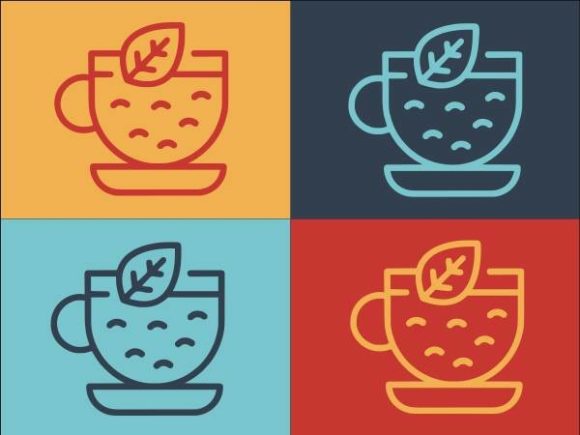
The Warm Tea Cup design reads immediately as modern and unhurried—no sharp angles or aggressive contrast, just gentle curves, balanced negative space, and a subtle warmth in its composition. The cup itself is stylized but recognizable; the steam swirls with just enough rhythm to suggest motion without clutter. There’s no heavy ornamentation, no dense fill areas, and no tiny serifs or fragile details that scream “stitching disaster.” That alone makes it promising for real embroidery work—not just digital mockups.
What stood out most was how naturally it invites customization. Swap the steam for a single sprig of mint? Add a monogram below in clean sans-serif? Adjust the cup’s tilt for better flow on a curved cap brim? Yes—it’s built for that. As a Logos asset, it avoids the trap of over-designing. It leaves room for fabric texture, thread variation, and human imperfection—qualities every handmade product needs to feel authentic.
Where Warm Tea Cup Shines (and Where It Needs Care)
I tested Warm Tea Cup across three real projects: a 100% cotton kitchen towel for a wedding gift, a lightweight unlined canvas tote for a small-batch tea shop, and a baby onesie in soft interlock knit. Here’s what held up—and where I paused:
- Tote bag design: Perfect scale and clarity at 3.5" wide. Satin stitch wrapped the cup rim cleanly; fill stitch in the body stayed breathable, not stiff—even on textured canvas. No puckering with medium tear-away stabilizer.
- Sweatshirt embroidery: Worked beautifully on mid-weight fleece, but only when hooped with cutaway + topping. The steam detail softened slightly on thick pile—so I simplified it to a running stitch outline in my digitized version. Lesson: Warm Tea Cup is adaptable, but not auto-pilot.
- Baby embroidery: On the onesie, I reduced overall density by 15% and used pastel poly thread. The result felt tender, not fussy—ideal for nursery decor or personalized gifts. But I’d avoid it on ultra-thin bamboo jersey without testing first: fine lines can blur if stitch density isn’t dialed back.
It’s strong on flat, stable surfaces—towels, pillow covers, aprons, patches—but tread thoughtfully on caps, curved seams, or stretchy knits. The cup’s base and handle rely on clean line continuity; on a baseball cap’s front curve, you’ll want to adjust placement or digitize a slight arc correction. And while it’s versatile, don’t assume it’s universal: on dark fabric, light thread needs extra coverage (a denser satin stitch or slight fill expansion), and on textured linen, keep stitch length generous to avoid snagging.
What This Design Says About Your Finished Product
Using Warm Tea Cup doesn’t just add decoration—it quietly shapes perception. On a handmade product, it signals care, intention, and quiet sophistication. Customers notice that. A customer once told me her embroidered tea towel “felt like something made for her, not mass-produced”—and that’s exactly the tone Warm Tea Cup delivers.
For Etsy sellers and craft fair vendors, it elevates perceived value without demanding premium pricing. It reads as professional, not generic. For boutique branding, it supports consistency across tags, packaging, and social media—especially since the SVG file works cleanly in Inkscape or Adobe Photoshop for quick mockup updates. And because it’s Graphics-class, not clipart, it scales without pixelation for both embroidery files and printable mockups.
Practical Notes Every Embroidery Designer Should Check
Before stitching your first Warm Tea Cup project:
- Test on scrap fabric matching your final substrate—especially for nap, stretch, or weight.
- Check thread color contrast: light-on-light or dark-on-dark can mute the steam detail. Try black-and-white mockups first.
- Review stitch density—some versions may run denser than needed for delicate fabrics or baby items.
- Confirm hoop size compatibility. Even elegant designs can overextend standard hoops if proportions aren’t balanced.
- Inspect corners and curves at actual stitch size. Zoom in digitally—then stitch physically.
- Use appropriate stabilizer: cutaway for knits, tear-away for stable wovens, topping for textured surfaces.
- If selling finished items or digital embroidery files commercially, verify licensing terms. This is a digital embroidery file meant for real use—not just display.
One last note: Warm Tea Cup isn’t flashy. It won’t dominate a busy festival booth or compete with neon lettering on streetwear. But that’s its strength. It belongs on thoughtful products—hand-stitched holiday embroidery, personalized gifts for tea lovers, small shop merchandise with soul, and custom apparel that feels like it was made *for* someone, not *at* them.
If you’re building a craft business where authenticity matters more than volume—if your customers choose your handmade product because it feels intentional, calm, and human—then Warm Tea Cup isn’t just a logo. It’s a quiet collaborator in your storytelling.