Coffee Bean Cup: A Designer’s Real-World Embroidery Review
As someone who’s stitched hundreds of logos onto tote bags, baby onesies, and boutique aprons—and advised dozens of Etsy sellers on what *actually* holds up in the hoop—I opened Coffee Bean Cup expecting elegance. What I got was something more useful: a quietly confident, well-proportioned logo that breathes like real embroidery, not just screen art.
First Impressions: Clean, Warm, and Purpose-Built
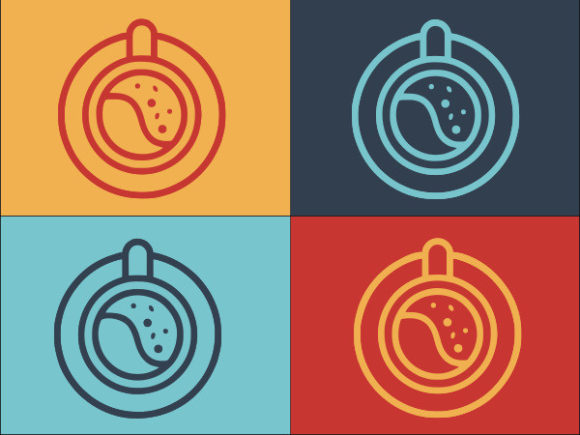
The moment you zoom in, Coffee Bean Cup feels intentional—not overdesigned, not undercooked. It’s a compact, centered composition: a stylized mug cradling two subtly shaded coffee beans, with soft negative space around the rim and base. No thin serifs. No fragile loops. No micro-details begging to vanish in satin stitch. That’s huge. Too many “modern” logos assume they’ll live only on screens—Coffee Bean Cup assumes it’ll live on a textured kitchen towel or a brushed-cotton sweatshirt.
It reads warm but professional—ideal for a small-batch roaster’s gift set, a café’s staff apron, or a handmade ceramicist’s holiday bundle. I pictured it instantly on a natural linen tea towel: embroidered in oatmeal thread, slightly off-center, with raw-edge hems. Not flashy—but unmistakably *crafted*.
Where It Shines (and Where It Asks for Care)
Coffee Bean Cup performs exceptionally well across common embroidery use cases—if you treat it like a thoughtful design asset, not a plug-and-play graphic. Here’s how it lands in real projects:
- Tote bags & aprons: Its balanced weight and moderate height (roughly 2.5–3 inches wide) fill a standard 4×4 hoop without crowding. The curves translate cleanly into satin stitch, and the bean shapes hold definition even at medium density.
- Sweatshirts & crewnecks: Works beautifully on mid-weight fleece or French terry—especially when paired with a light tear-away + cut-away stabilizer combo. The design doesn’t fight the fabric’s nap; it sits comfortably within it.
- Baby items & nursery decor: Gentle enough for onesies and pillow covers. No sharp corners or dense fill areas that could irritate sensitive skin. I’d recommend a low-density fill stitch here—just enough texture to read, not enough to stiffen.
- Patches & caps: Use caution on curved surfaces like baseball caps. The cup’s rounded base adapts well, but test placement first—the top curve can distort if hooped too aggressively. Also, avoid stitching it directly onto thin twill unless backed with heavy stabilizer.
Watch These Details—Especially for Commercial Use
This isn’t a “set it and forget it” embroidery file. Its strength lies in its restraint—and that means it rewards attention:
- Small hoop sizes: It scales down cleanly to ~1.75", but below that, the bean details begin to merge. If you’re making keychain patches or tiny sleeve logos, check stitch clarity in your embroidery software before finalizing.
- Textured or dark fabrics: On burlap or charcoal fleece, contrast matters. Test thread colors—cream or heather grey often reads warmer and more cohesive than stark white. Avoid ultra-light thread on black denim unless you’re using underlay stitches for lift.
- Frequent-wash items: Kitchen towels, baby bibs, and kids’ tees need durability. Confirm stitch density isn’t overly sparse—running stitch outlines alone won’t survive repeated laundering. A light fill + satin border gives longevity without stiffness.
- Layered garments: Think hoodies with pockets or reversible totes. Hoop carefully—the cup’s clean silhouette can get visually lost if placed too close to seams or zippers. Give it breathing room.
Why It Builds Trust—Not Just Decoration
Customers don’t buy logos. They buy signals: care, consistency, intention. Coffee Bean Cup delivers that quietly. Its simplicity makes it feel hand-chosen—not algorithmically generated. When stitched on a custom embroidered pillow cover for a wedding gift, it reads as personal, not generic. On an Etsy listing for handmade mugs, it reinforces brand cohesion without shouting.
That matters for craft businesses. A strong, adaptable logo like this helps unify your product line—whether you’re selling digital embroidery files, physical patches, or finished apparel. It also translates well into printable mockups: the SVG compatibility means you can quickly generate lifestyle previews for social posts or shop banners without losing fidelity.
Practical Notes from the Hoop
Before you load Coffee Bean Cup into your machine or list it as part of a digital bundle, take five minutes to:
- Run a test stitch on scrap fabric matching your target project (e.g., terry cloth for towels, fleece for sweatshirts).
- Compare black and white thread on both light and dark fabric swatches—some shades flatter the design’s warmth better than others.
- Inspect small curves in your embroidery software: are the bean contours smooth in stitch simulation? Adjust node count if needed.
- Confirm hoop size requirements—while it fits a 4×4 comfortably, double-check if your version includes alternate sizes or scaling guidance.
- Review licensing terms carefully. Since it’s categorized under Logos and Graphics, clarify whether commercial use (e.g., selling finished embroidered totes or reselling the SVG as part of a design pack) is permitted.
And one last note: Coffee Bean Cup isn’t trying to be everything. It won’t replace a full monogram suite or a detailed scene-based applique design. But as a focused, versatile, embroidery-aware logo—it’s exactly the kind of quiet workhorse that builds repeat customers, strengthens boutique branding, and makes your handmade product feel thoughtfully complete.
Use it where warmth meets wearability. Stitch it where people pause—and smile.